

Edge computing · OT/IoT
Cabinet Edge Controller
A system built to make traditional electrical cabinets programmable and connected while keeping operational control on the edge node.
Edge computing · OT/IoT
Cabinet Edge ControllerLocal control, connected infrastructure.
A system built to make traditional electrical cabinets programmable and connected while keeping operational control on the edge node.
The images are interface reconstructions produced from the original source material. Dynamic states are simulated and identifying data is illustrative.
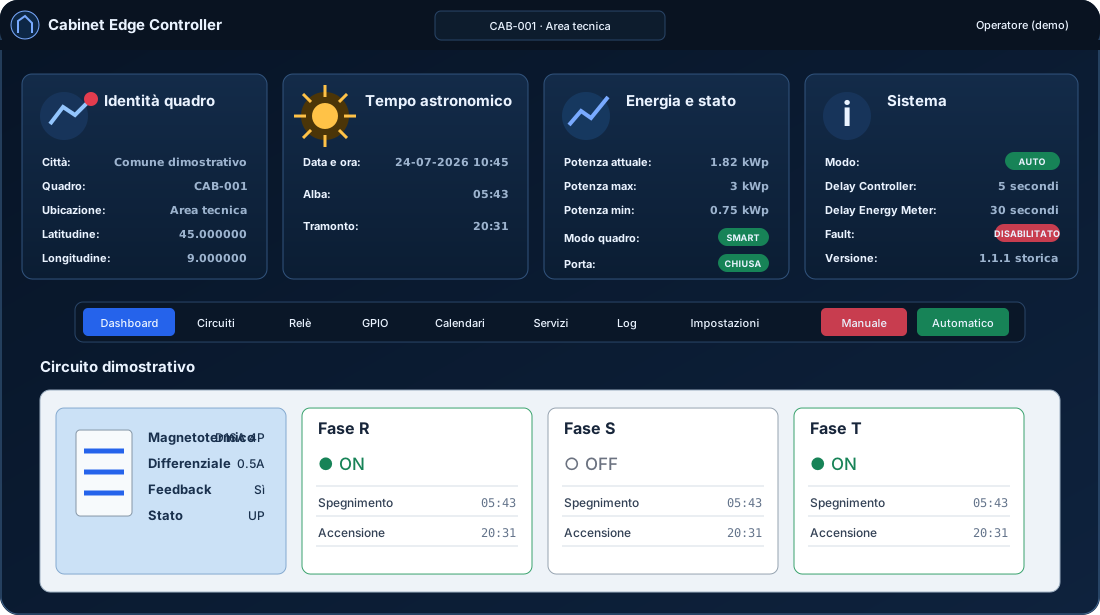
Project overview
Turning a traditional electrical cabinet into an intelligent node
The project combines local automation, technical supervision and cloud communication without making Internet connectivity a dependency for daily operation.
Local automation
Weekly and astronomical schedules using sunrise, sunset and offsets are executed directly on the device.
Hardware integration
Network relays, GPIO inputs, physical doors, selectors and feedback signals are coordinated by dedicated services.
Energy monitoring
Modbus/TCP meters provide power and electrical data normalised for display and telemetry.
Cloud connection
MQTT handles commands, notifications, heartbeats and telemetry while local control remains independent.
Operational interface
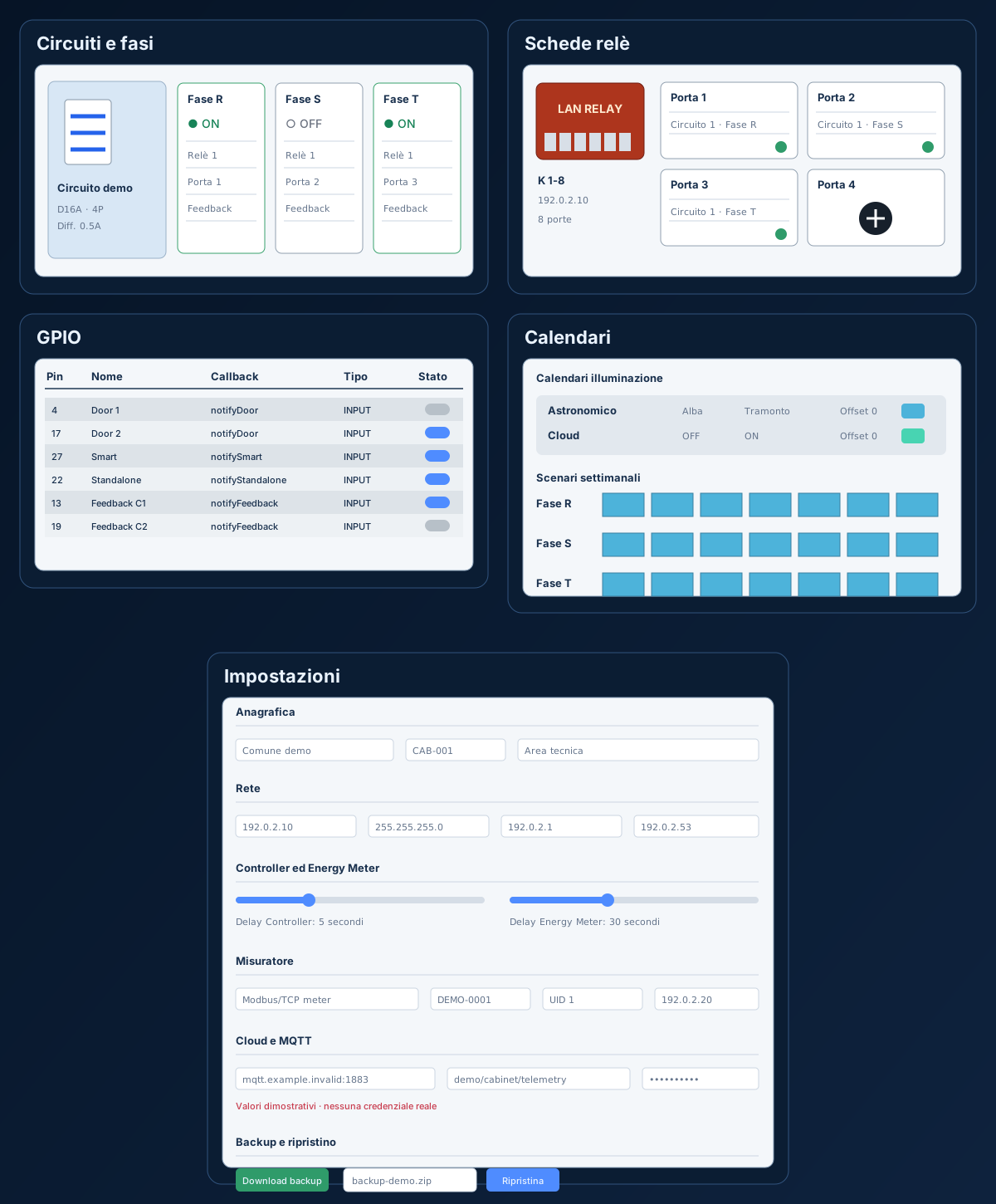
Local configuration, supervision and control
The reconstructions are presented as independent views so the principal areas of the web application installed on the edge node can be inspected clearly.
Technical architecture
Web application, daemons and physical devices coordinated on the edge node
The architecture combines web layers and separate system services connected through local databases and hardware adapters.
Web UI and backend
A Vue SPA communicates over HTTP/AJAX with a PHP backend responsible for configuration, authentication and administrative operations.
Linux services
Controller, GPIO, Energy Meter, MQTT API and Watchdog run as systemd units with automatic restart.
Local persistence
Separate SQLite databases store system configuration, devices, calendars and application logs.
Hardware and protocols
UDP relay boards, GPIO, Modbus/TCP meters and MQTT brokers connect software, cabinet and remote platforms.
Edge autonomy
The cloud supervises while the node keeps controlling
Scheduling, configuration and desired state remain on the device. Losing remote connectivity does not interrupt local calendars.
Shared desired state
UI, schedules and MQTT commands update a common model that the Controller applies to the actuators.
Local scheduling
Day, time, geographical coordinates, sunrise, sunset and offsets are evaluated on the node.
Physical state verification
The Controller compares configuration with actuators and sends commands only when physical state differs.
Limits and lessons learned
A functional foundation requiring modernisation before a new operational deployment
The project demonstrates concrete integration, but the historical stack needs a substantial security, reliability and maintainability revision.
Application security
Web process privileges, authentication, secret management, TLS and authorisation need to be redesigned.
Concurrency and audit
Shared SQLite access requires queues, coordinated transactions, idempotency and event traceability.
Hardware coupling
Drivers, paths, services and configuration should be separated through adapters and versioned contracts.
Updates and observability
Signed packages, health checks, metrics, structured logs and controlled OTA procedures are required.
Proposed evolution
Preserve edge autonomy while separating command, telemetry and configuration
A new version would retain the original operational value while introducing safer boundaries and replaceable components.
- 01
Authenticated local API
The UI talks to a reduced-privilege service protected by modern sessions, RBAC and an audit trail.
- 02
Message bus and command queue
Idempotent commands, controlled retries and separation of desired and physical state improve reliability.
- 03
Abstract hardware drivers
Relays, GPIO, meters and cloud connectors become adapters that can be tested without a physical plant.
- 04
Signed updates
Debian packages, versioned migrations and an OTA agent support safe fleet maintenance.
Skills and technologies
A full-stack case study spanning software and physical infrastructure
The project covers functional analysis, web development, embedded Linux, protocols, system services, electrical integration and deployment.
Work covered
Technology stack
Edge systems and integration
Do you have a plant or physical process that needs to become observable and programmable?
We can assess constraints, hardware, operational continuity and integrations to define a sustainable architecture.